


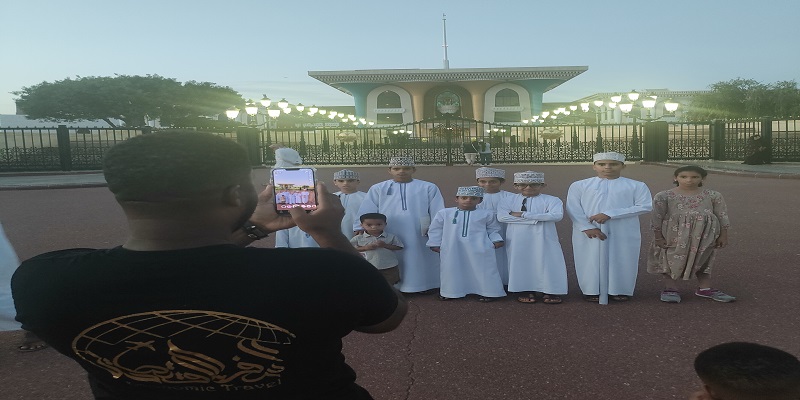
*A Masterpiece Reflecting Oman's Rich Heritage*
Al Alam Palace in Muscat, also known as the Sultan's Palace, is one of the most prominent tourist and historical landmarks in the Sultanate of Oman. This palace combines contemporary luxury with authentic Omani heritage, making it a must-visit destination for tourists and history enthusiasts alike.
*History of Al Alam palace*
The history of Al Alam Palace dates back to 1800 when Imam Sultan bin Ahmed, the seventh grandfather of Sultan Qaboos, ordered its construction with the help of Portuguese engineers. The palace was previously known as "Bait Al Alam" and served as a residential headquarters for rulers until the reign of Sultan Said bin Taimur. In 1972, Sultan Qaboos ordered the reconstruction and renovation of the palace, transforming it into an architectural masterpiece that reflects modern Omani identity.
*Architecture and Design*
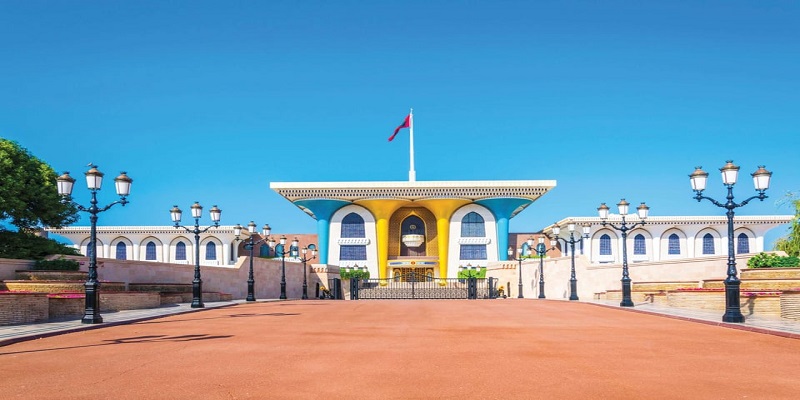
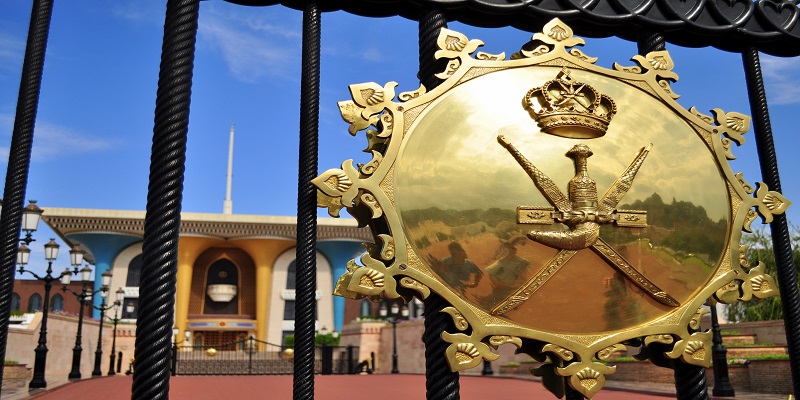
Al Alam Palace is distinguished by its unique façade featuring columns adorned with golden and blue mosaics, reflecting modern Islamic architectural style. The palace is surrounded by a vast garden filled with trees and flowers, adding to its natural charm. It also overlooks the historic forts of Al Jalali and Al Mirani, which date back to the 16th century.
*Current Uses*
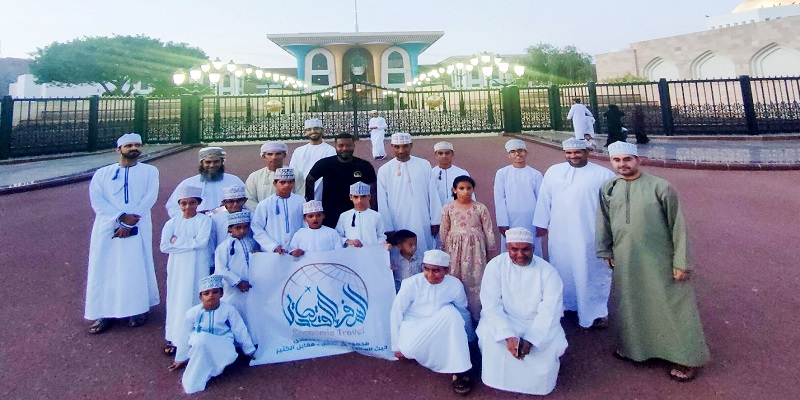
Al Alam Palace is currently used to host official guests, such as heads of state and kings, and to hold important government meetings. Among the notable figures received here are the Queen of England and the Queen of the Netherlands. Although the palace is not open to the public for interior visits, visitors can enjoy viewing its exterior and taking memorable photos.
*Tips for Visitors*
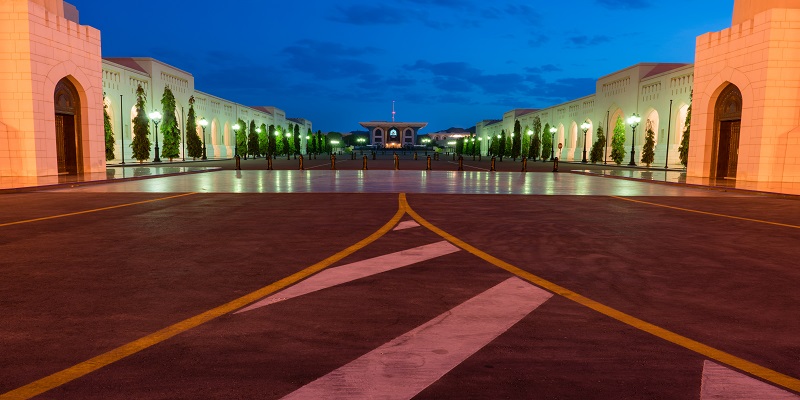
- Best Time to Visit: It is preferable to visit the palace on sunny days when the vibrant colors of the façade stand out, or at night when the palace is beautifully illuminated.
- Nearby Activities: Visitors can explore the nearby Al Jalali and Al Mirani forts or enjoy a stroll in the palace gardens.
*Al Alam Palace as a Cultural Symbol*
Al Alam Palace is not just a luxurious building; it is also a symbol of Omani culture. The palace reflects Oman's rich history and architectural heritage and serves as a platform for cultural and artistic events that tell the story of the country and enhance visitors' understanding of its traditions.
*Conclusion*
Al Alam Palace in Muscat is more than just a historical building; it is an architectural gem that bridges the past and the present. Visiting this palace offers a unique opportunity to discover the elegance and beauty of Oman, making it an unforgettable tourist destination.
Location of Al Alam Palace on Google Maps